
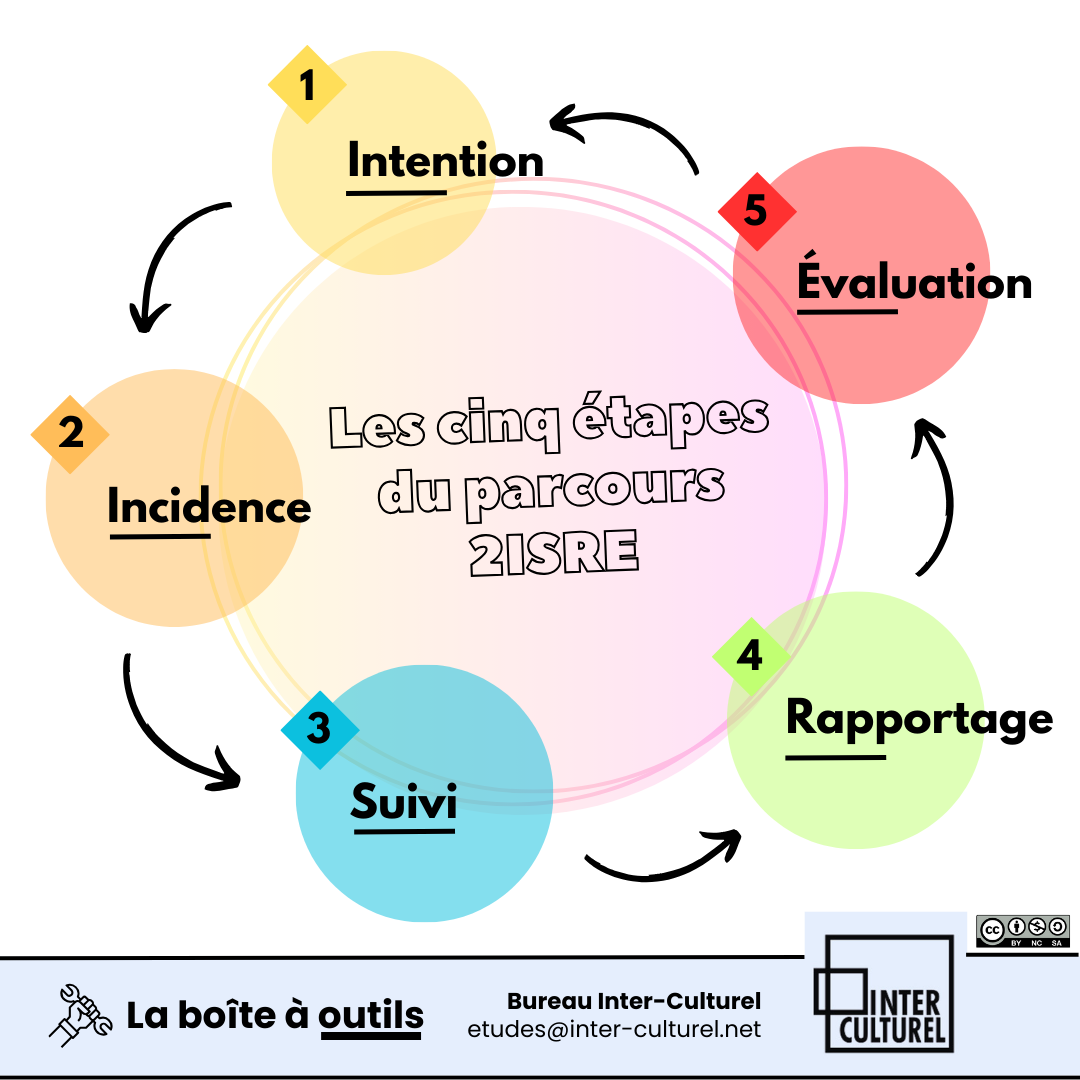
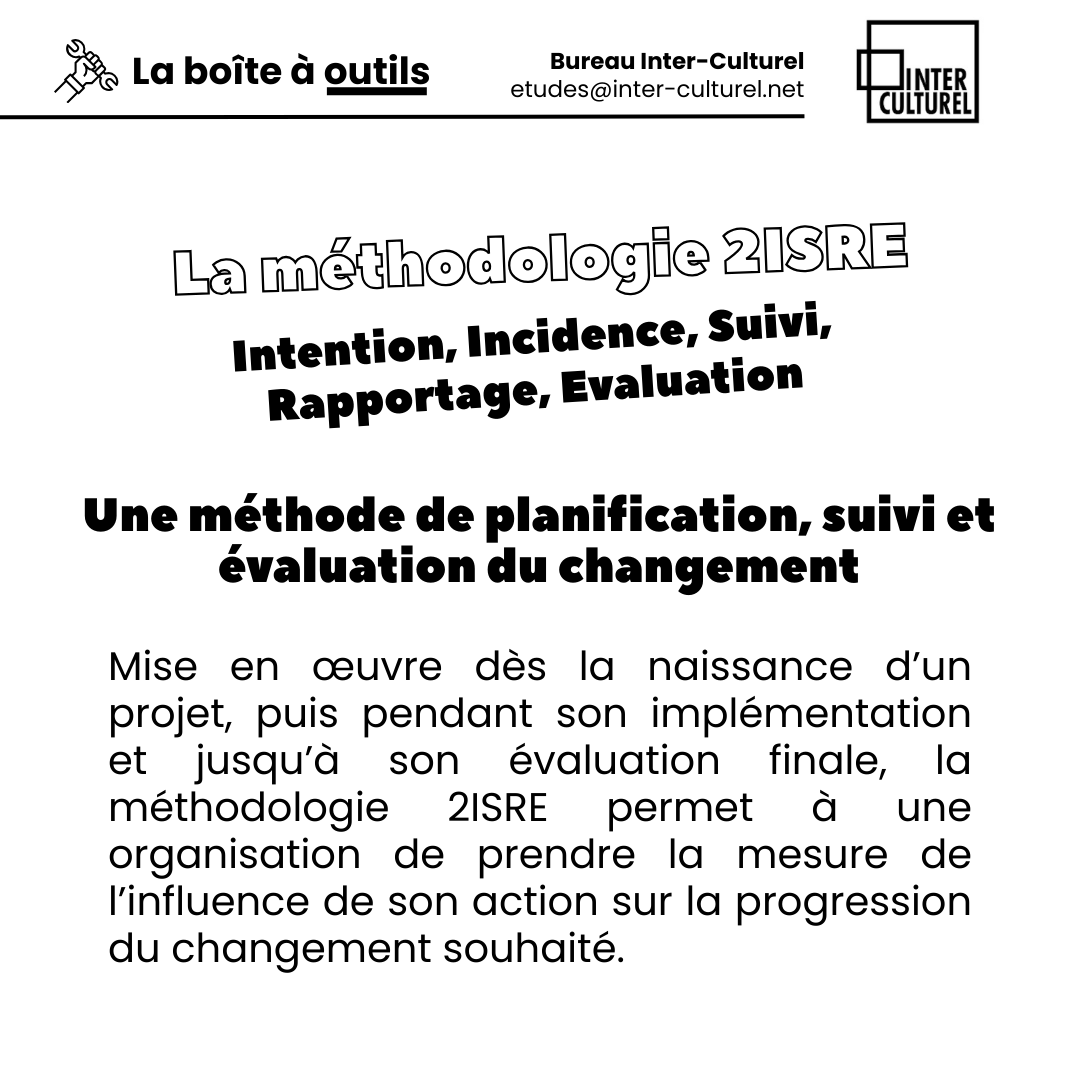
The 2ISRE* process is a comprehensive methodology for planning, monitoring, and evaluating change that SUWEDI developed for the Inter-Culturel consulting firm.
It is designed to be implemented from the start of a project, throughout its implementation, and until its final evaluation, in order to enable an organization to measure the impact of its actions on the progress of the desired change. This pathway, which is part of Change-Oriented Approaches (COA), is designed to transform your projects into levers for sustainable change, ensuring that each step actively contributes to the intention and, therefore, to the desired final impact.
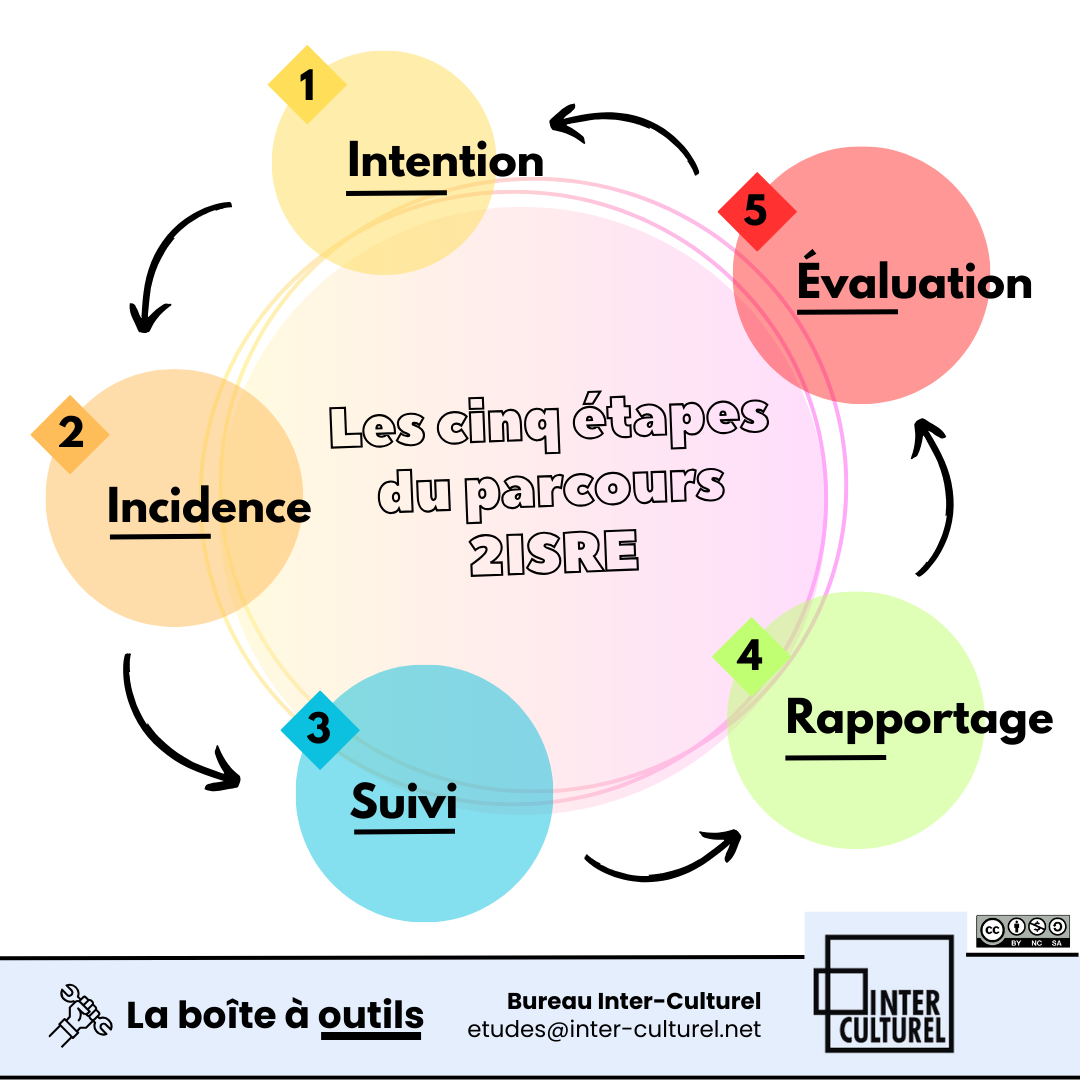
The 5 steps of the 2ISRE process:
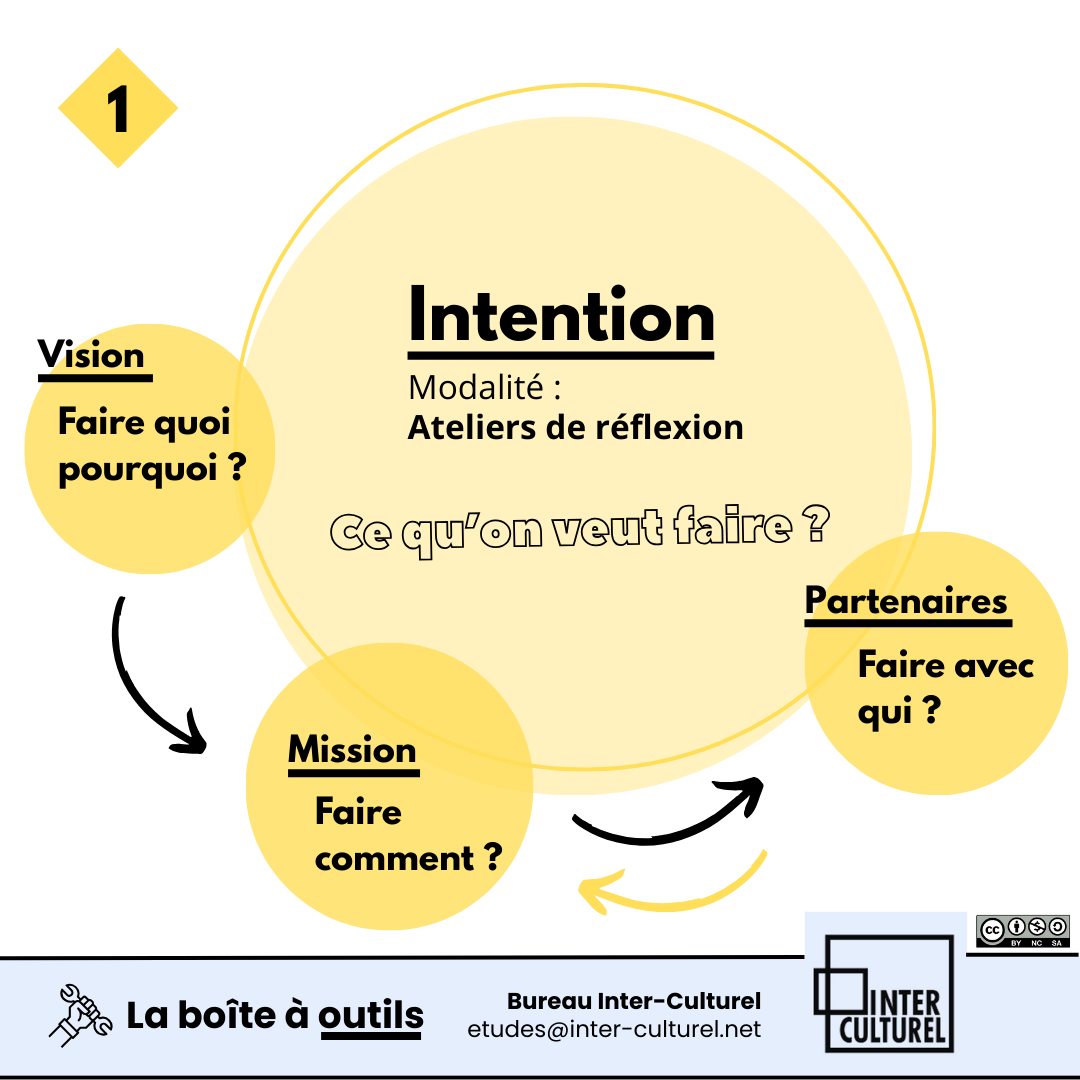
Step 1: Intention (the heart of an COA vision)
In the Intention phase, it is crucial to formulate change hypotheses that take local specificities into account while aiming for global impact. For example, an organization may want to improve access to education for women in several countries, but strategies must be adapted to each context.
Key Actions:
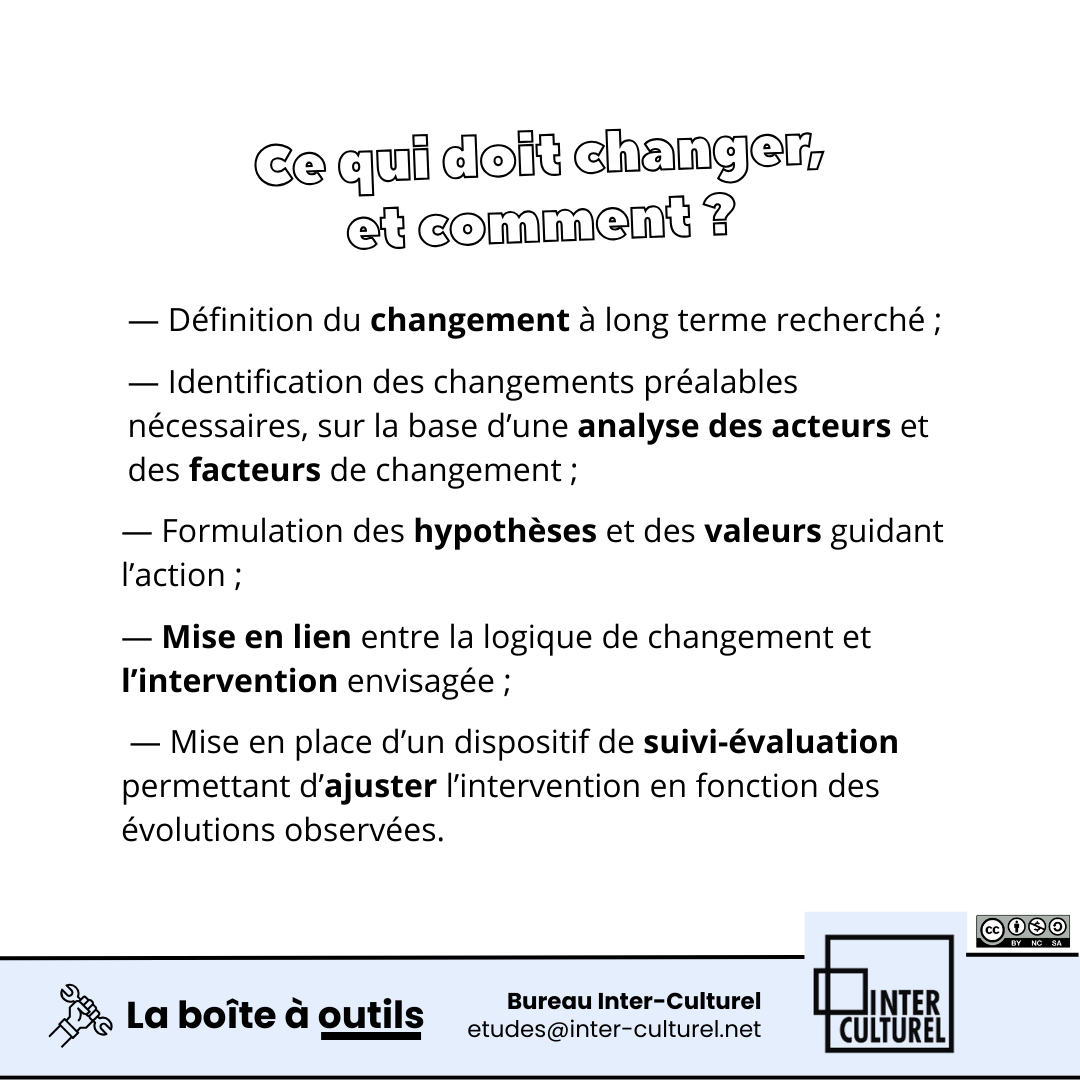
- Define long-term change (end goal): Clearly visualize the world as it will be once the change is successful. This is the beacon that guides all actions.
- Formulate change assumptions: Identify the assumed cause-and-effect relationships between project actions and long-term change. These hypotheses must be explicit and verifiable (e.g., “if we increase women’s ability to access land, then their economic status will improve, contributing to women’s empowerment”).
- Identify guiding values and principles: Ensure that the project is aligned with the core values of the organization and those of the target communities.
⇒ Link to COA: This step is the essence of COA. It anchors the project in a results-based approach, focusing first on the desired final impact rather than on activities alone. The emphasis is on the “why” and ‘what’ before the “how.”
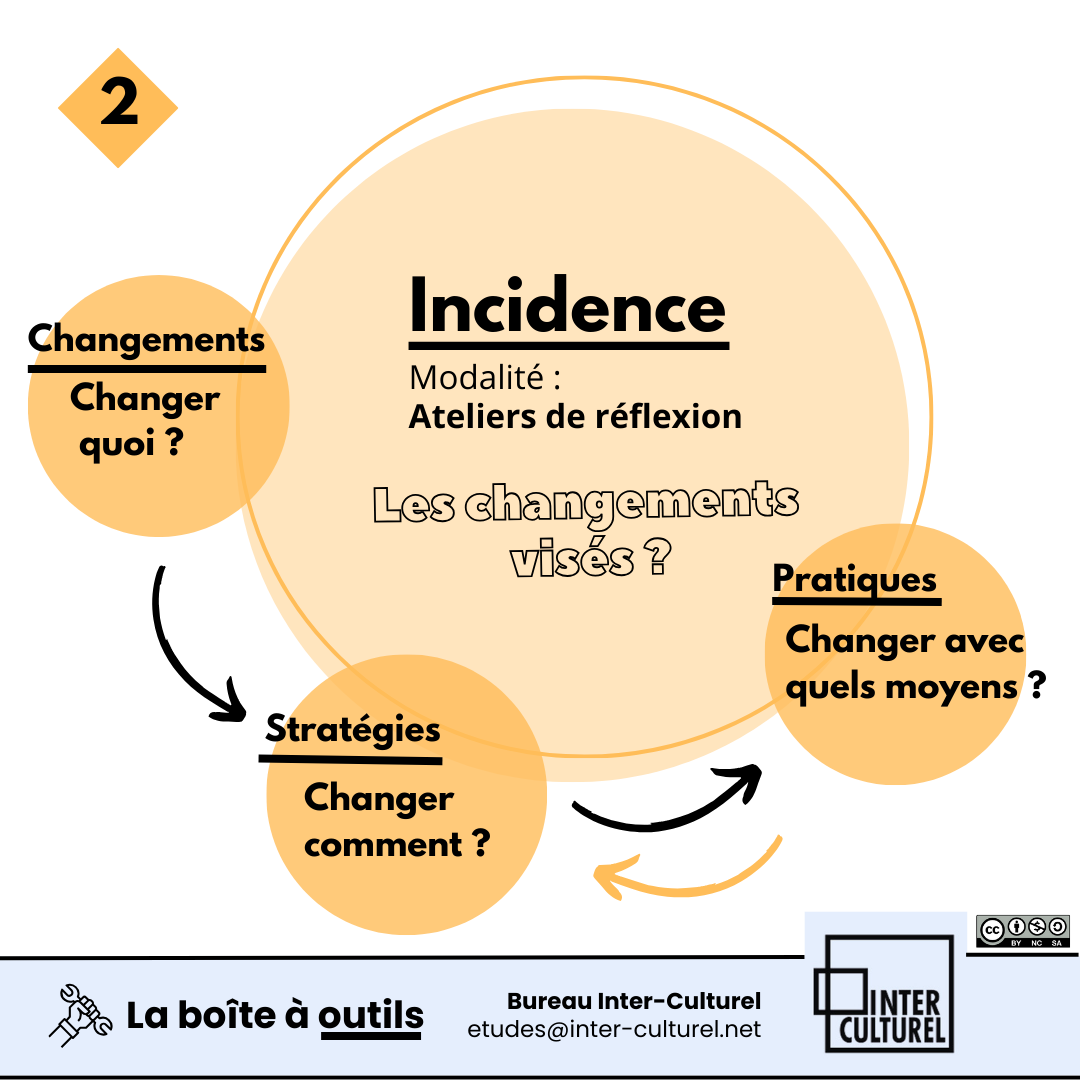
Step 2: Impact (field analysis)
During the Impact stage, it is important to map stakeholders not only at the local level, but also to consider international influences [see “Influence Mapping,” a tool developed by Inter-Culturel]. This makes it possible to identify potential alliances and opposition/resistance in each country, in each field at the local level, thus facilitating stakeholder engagement.
Key Actions:
- Analyze the preconditions: Identify the intermediate changes necessary to achieve long-term change. These are the “small steps” that lead to major transformation.
- Map actors and their interests: Understand who the stakeholders are, what their roles, powers, objectives, and interests are, and how they can influence or be affected by the project. This includes identifying allies, opponents, and neutrals.
- Identify drivers of change and risks: Determine the factors that can facilitate or hinder progress toward change, and anticipate potential challenges.
⇒ Link with COA: This step is crucial for relevance and feasibility. It ensures that the project is grounded in reality, taking into account social, political, and economic dynamics. Analyzing stakeholders allows us to anticipate resistance and develop effective engagement strategies.
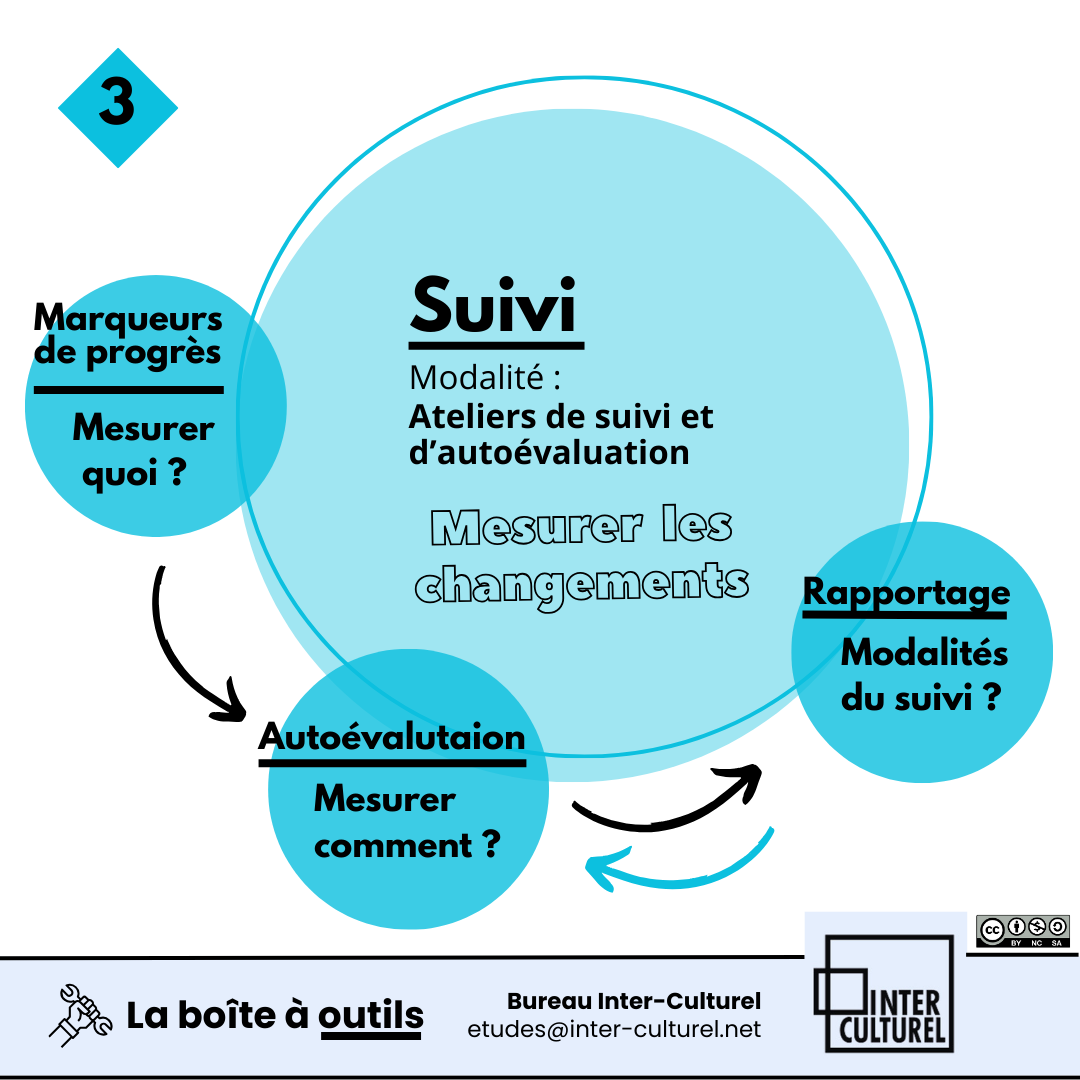
Step 3: Monitoring (observing the “dance” of change)
Monitoring performance requires indicators that are tailored to each field and local context, enabling the effectiveness of interventions to be assessed. It is therefore essential to establish data collection mechanisms that take social, cultural, and economic differences into account. This allows interventions to be adjusted in real time to maximize impact.
Key Actions:
- Develop a monitoring and evaluation framework: Define clear, measurable, and relevant indicators to track the progress of change hypotheses and preconditions.
- Establish data collection mechanisms: Choose appropriate methods for collecting qualitative and quantitative information on a regular basis.
- Analyze and interpret data: Review the information collected to understand what is working, what is not working, and, most importantly, why.
- Adapt the intervention: Use lessons learned from monitoring to adjust project strategies and activities in real time. This is the principle of continuous learning.
⇒ Link to COA: Monitoring from an COA perspective is not just a measurement of activities, but an observation of progress toward expected results. It emphasizes learning and adaptation, allowing the project to remain agile in the face of unforeseen events and changes in context.
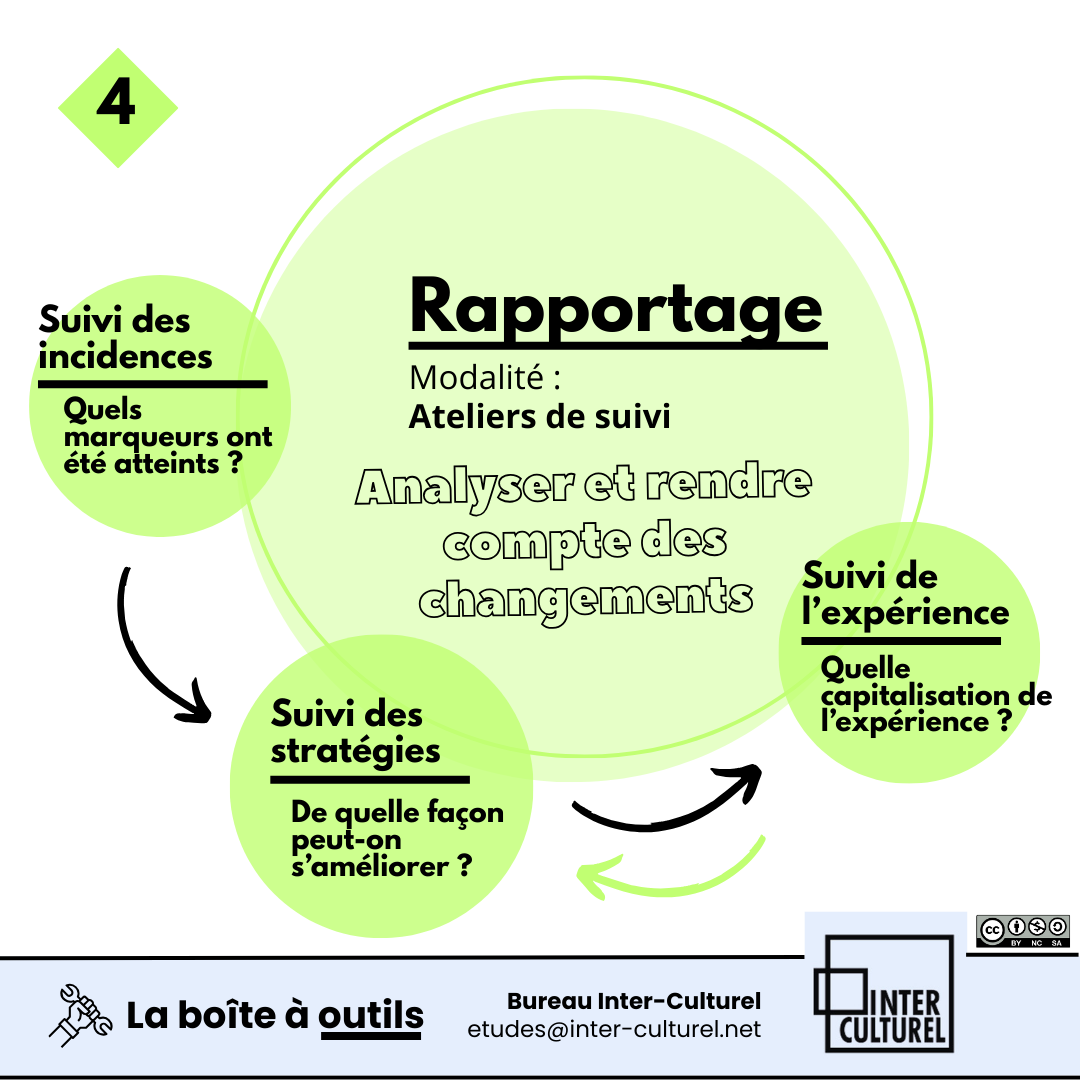
Step 4: Reporting (telling the story of change)
During the reporting stage, it is crucial to tell the story of change in a way that resonates with different stakeholders internationally. This reinforces transparency and accountability.
Key actions:
- Document progress and challenges: Systematically record monitoring data, analyses, lessons learned, and adjustments made.
- Communicate results to stakeholders: Share information transparently and in a way that is tailored to each audience (donors, partners, beneficiaries, internal teams).
- Facilitate accountability: Enable different stakeholders to report on their contributions and results.
⇒ Link to COA: Reporting in an COA framework goes beyond a simple financial or activity report. It aims to tell the story of change, explain how and why results are achieved (or not), and highlight lessons learned. It builds trust and commitment.
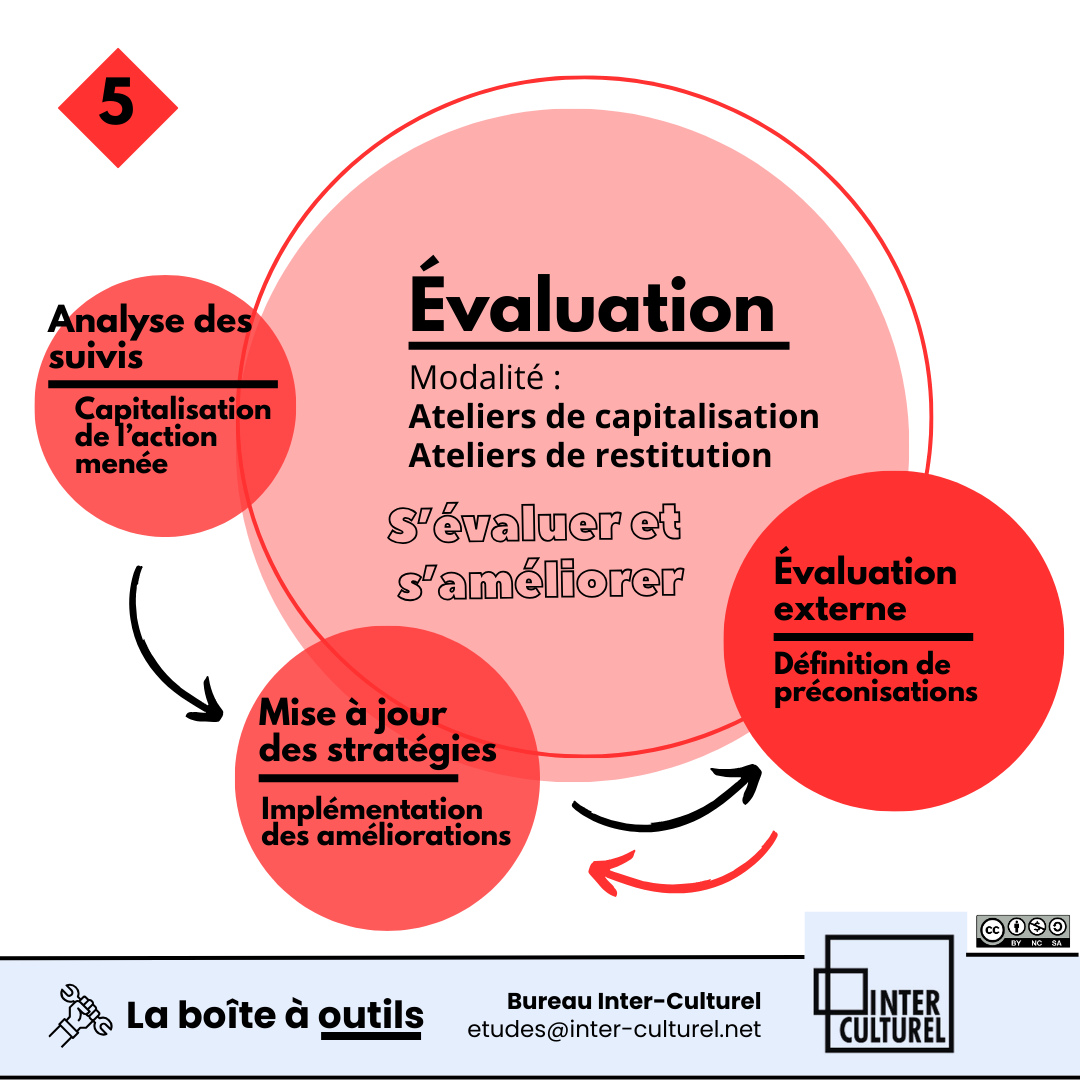
Step 5: Final Evaluation (lessons learned and recommendations)
During the evaluation stage, it is important to learn not only from local results, but also from those obtained internationally. This enriches future intentions and improves internationalization strategies. The final evaluation of the project includes a process of capitalizing on the experience and should result in relevant recommendations.
Key Actions:
- Measure the achievement of objectives: Assess the extent to which long-term and intermediate changes have been achieved.
- Analyze relevance and effectiveness: Assess whether the strategies and activities were appropriate and led to the expected results.
- Identify success factors and lessons learned: Draw conclusions about what worked well, what could be improved, and the implications for future projects or programs.
- Formulate recommendations: Propose concrete courses of action for the future.
⇒ Link to COA: Evaluation from an COA perspective is a key moment for systemic learning. It allows initial change hypotheses to be validated or invalidated and enriches understanding of change dynamics. The lessons learned directly feed into the next Intention phase, creating a loop of continuous improvement.
By following this 2ISRE path, you ensure that your project is not only well managed, but also a true driver of change, rooted in a deep understanding of its context and potential impact.
Key words and concepts of the 2ISRE approach:
- Clear vision of long-term change.
- Detailed understanding of the context and stakeholders.
- Robust and testable change hypotheses.
- Relevant and realistic indicators.
- Agile monitoring and learning mechanisms.
- Communication and accountability tools.
- Ability to adapt and adjust.
- Willingness to learn and share lessons.
* The 2ISRE course is one of the tools developed for the Inter-Culturel Office and made available to everyone via the “Inter-Culturel Toolbox.” Feel free to use it, draw inspiration from it, and suggest improvements and ideas: bruno@inter-culturel.net.
0 Comments